If you have searched for this, you have probably already found what most people find: either nothing at all, or a single sentence buried in a longer article saying discharge is “normal” before moving swiftly on.
That is not good enough. Discharge and odor after sigmoid colon vaginoplasty are among the most common concerns our patients raise, and among the least honestly answered online. People research this privately, often late at night, often long before they feel able to raise it in a consultation.
So here is a straight answer. Yes, colon vaginoplasty produces ongoing discharge. Yes, there can be an odor. Both are usually manageable with a simple routine, both settle substantially over the first year, and neither should stop you considering the procedure if it is otherwise right for you. What follows is what to expect, what to do about it, and the small number of signs that mean you should speak to a doctor.

Why colon vaginoplasty produces discharge
Sigmoid colon vaginoplasty creates the vaginal canal using a segment of your own sigmoid colon. That tissue is transplanted, but it does not change what it is. Colonic mucosa evolved to produce mucus, and it continues to produce mucus in its new location.
This is the trade-off at the heart of the technique, and it is worth stating plainly in both directions.
The same biology that produces discharge is the biology that gives colon vaginoplasty its natural self-lubrication. Patients who choose this technique typically do so precisely because they want a canal that lubricates on its own, without depending on external products. You cannot have one without the other. The mucus is not a malfunction — it is the mechanism.
By comparison, penile inversion vaginoplasty uses skin, which does not self-lubricate and therefore produces no discharge, but requires lubricant for any penetrative activity. Penile-peritoneal vaginoplasty (PPV) is also self-lubricating, using peritoneal tissue, with a fluid character that differs from colonic mucus.

What is normal in the first year
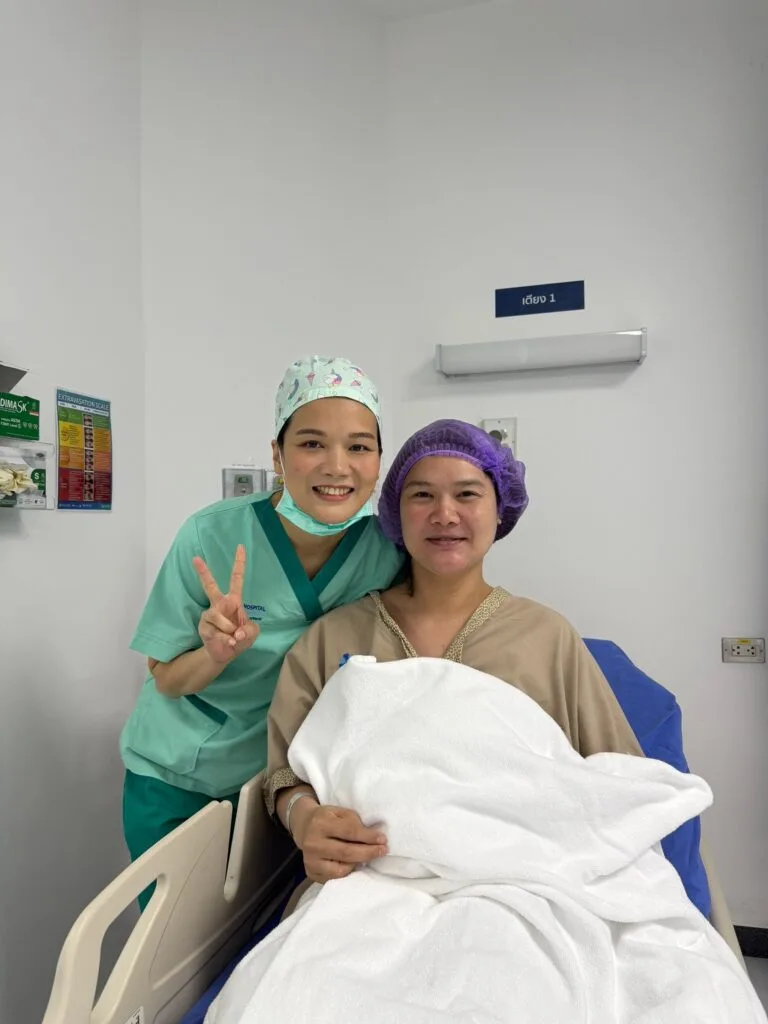
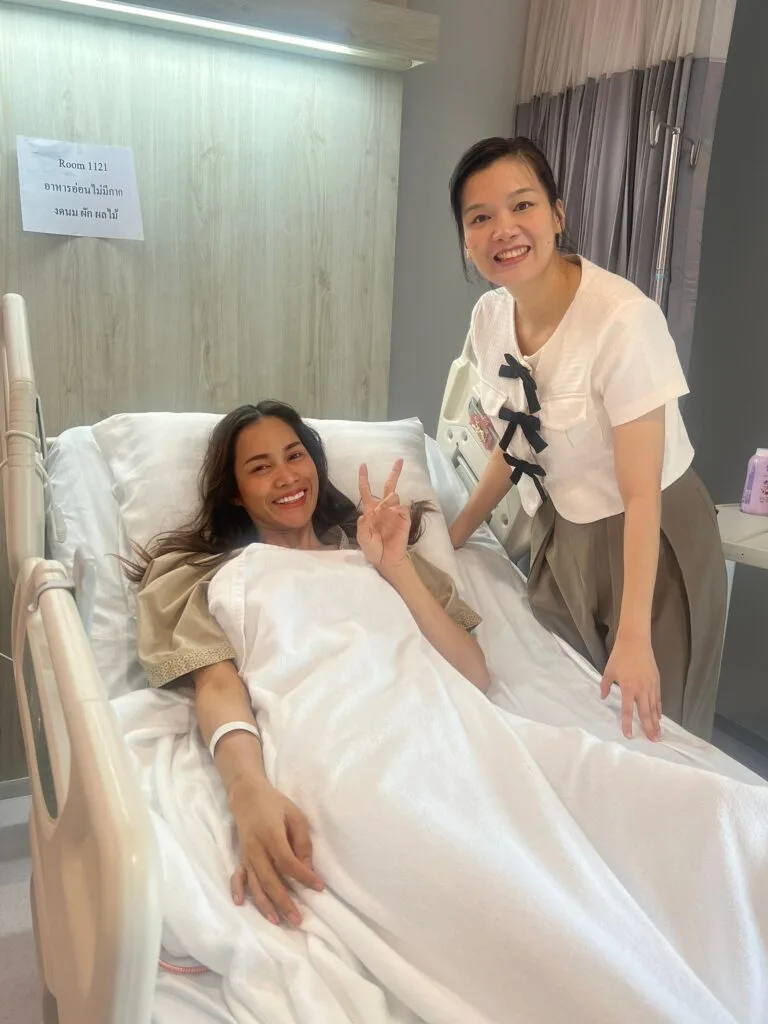
For most patients, the first six to twelve months mean one to two sanitary pads daily.
That is the honest figure, and we would rather you hear it now than discover it after surgery. It is a real adjustment, and for some patients it is the most unexpected part of recovery.
The volume reduces over that period for two reasons. The transplanted segment gradually settles into its new role — it is no longer passing stool, and its output adjusts accordingly. And regular irrigation, covered below, keeps the canal clear and prevents mucus accumulating.
Around 20% of patients report heavier flow that persists through the first year. Others barely notice it after the early months. The variation between individuals is genuine and largely unpredictable.
Where these figures come from
We want to be clear about the limits of our own data.
These numbers reflect patients who stay in contact with us after surgery. The reality of caring for international patients is that roughly six in ten gradually stop communicating once they return home and get on with their lives — which is, in its way, a good sign. But it means our figures describe the four in ten who maintain contact, and those patients may not be perfectly representative.
We would rather tell you that than present a confident statistic we cannot fully support.
“Around 20% of patients report heavier flow that persists through the first year.“
What colon vaginoplasty discharge settles into long term
Past the twelve-month mark, most patients describe something quite different from the early recovery period: comfortable, natural lubrication rather than discharge they have to manage.
In practical terms, that means minimal to no leakage, even after a long day out. Most patients stop using pads entirely. Those who experienced heavier flow during the first year may continue using a pad daily, or on heavier days only.
This is the point at which the trade-off starts to feel worthwhile to most patients. The maintenance burden drops considerably, and what remains is the self-lubrication they chose the technique for.
Why you should still use lubricant
This surprises people, so it deserves its own section.
Even though your canal is self-lubricating, use lubricant for dilation and for penetrative intercourse.
The reason is friction. Without adequate lubrication, repeated friction can cause granulation tissue to form, or produce a small skin tag inside the canal. Neither is dangerous, but both are genuinely unpleasant to live with — they can be painful, they bleed easily, and removing one requires a visit to a doctor’s office.
This is entirely preventable. Use lubricant, and use enough of it, even on days when it feels unnecessary. It is the single easiest thing you can do to avoid an avoidable complication.
Choose an unscented, body-safe lubricant. Scented products are covered below, and the short version is: avoid them.
For more on technique and frequency, see our complete guide to dilation after vaginoplasty.
Colon vaginoplasty odor: causes and management
Some odor is normal. Colonic mucus has a scent, and a neovagina created from colonic tissue will not smell like a cisgender vagina, because it is not made of the same tissue and does not host the same bacteria.
That is worth understanding properly. A neovaginal microbiome is its own thing. The flora differ, the pH differs, and advice written for cisgender women — including most of what you will find online about vaginal odor — does not straightforwardly apply to you.
What is normal is a mild, musky scent. What is not normal is a foul or putrid smell, which usually indicates bacterial overgrowth rather than anything inherent to the tissue. That distinction matters, and the section below on when to contact a doctor tells you what to do about it.
Most odor concerns come down to hygiene routine, and most resolve with a consistent one.
The APS irrigation routine
| How often | A thorough douche two to three times per week, plus a quick rinse after every dilation session to clear out lubricant |
| What to use | Plain warm water. If you live somewhere with poor tap water quality, use saline instead |
| Equipment | A bulb douche — the thicker kind designed for vaginal use, not the narrower anal type |
| Avoid | Hot water, soap, and scented lubricants |
| Acceptable | Commercial douches and intimate care gels are fine if you prefer them, but plain water works best |
Two details from that table deserve expanding, because they are the ones patients most often get wrong.
Rinse after every dilation session. Lubricant left sitting in the canal is a common and easily solved cause of odor. This rinse does not need to be thorough — a quick flush is enough.
Consistency beats intensity. Two or three thorough douches a week, done reliably, work better than daily aggressive cleaning.
Warm water, never hot
People assume hotter water cleans better. It does not, and it can irritate the tissue lining the canal.
Comfortable bath temperature is right. If it is too hot to hold your wrist under comfortably, it is too hot to irrigate with.
Why soap makes odor worse
This is the most common mistake we see, and it is entirely understandable.
If your instinct when worried about smell is to wash more aggressively, resist it. Soap disrupts the bacterial balance inside the canal, and a disrupted balance tends to produce more odor, not less. Patients frequently arrive in a cycle where the smell prompts harder washing, which worsens the smell, which prompts harder washing again.
Plain warm water. Nothing else inside the canal. External washing with mild unscented soap is fine.
Diet can influence odor for some patients, much as it influences body odor generally. If you notice a pattern, it is worth paying attention to, but we do not recommend any specific diet.
Diversion colitis after sigmoid vaginoplasty
Diversion colitis is an inflammation that can affect a segment of colon which has been diverted from the normal digestive stream. It is a recognized complication of sigmoid colon vaginoplasty, and since you may encounter the term while researching, it is worth explaining.
Where it occurs, it can cause increased discharge, a change in odor, spotting, and discomfort. It is diagnosable and it is treatable.
We have had no reported cases of diversion colitis among our own primary vaginoplasty patients. The cases we encounter arrive as revision patients — people who had their first vaginoplasty at another clinic and came to us afterward.
We are being precise with that wording. We are not claiming it has never happened, because as noted above, we lose contact with a majority of patients over time. We are saying that in the cases we know about, it has not occurred in our own primary surgical patients.
If you are experiencing symptoms that concern you, whether you were operated on here or elsewhere, the answer is not a protocol you find online. It is an assessment by a surgeon who can examine you. Dr. Ae reviews these cases regularly, including revision surgery for patients who had their first operation at another clinic.
When to contact a doctor
Most discharge and odor concerns are routine and resolve with the routine above. These are the signs that warrant medical attention rather than a change to your hygiene habits:
- A foul or putrid odor, clearly different from the normal musky scent
- Green, yellow, or purulent discharge
- A sudden change after months of stability — if things have been settled and then abruptly are not, that is worth investigating
- Fever alongside any change in discharge
- Unusual pelvic pain — some discomfort is expected during recovery, but pain that feels different from what you were told to expect, or that arrives after you had settled, should be reported
If you are far from your surgical team, contact them anyway. Most of these can be assessed remotely in the first instance, and we would far rather hear from you early than have you wait.
One thing deliberately not on that list: light bleeding. Granulation tissue and small skin tags bleed easily, and this is common enough that treating all bleeding as an emergency would cause unnecessary alarm. If bleeding is persistent, heavy, or accompanied by anything else on the list above, then contact your surgeon.
How the vaginoplasty techniques compare on discharge
If you are still deciding between techniques, discharge and maintenance are legitimate factors — though rarely the deciding ones.
| Vaginoplasty Technique | Self-lubricating | Ongoing discharge | Maintenance |
|---|---|---|---|
| Colon | Yes, naturally | Yes — highest of the four | Regular irrigation; lubricant still advised |
| PPV | Yes, naturally | Yes, generally lighter | Regular irrigation; lubricant still advised |
| Skin graft | No | Minimal | Lubricant required for penetration |
There is no universally correct answer here. Colon vaginoplasty offers reliable depth and genuine self-lubrication, and the discharge is the cost of that. Some patients consider it an easy trade. Others would rather use lubricant and skip the daily management. Both are entirely reasonable positions.
For a fuller comparison of the two self-lubricating techniques, see our guide to PPV vs colon vaginoplasty.
FAQs
There is usually a mild, musky scent, which is normal for colonic tissue. A strong or foul odor is not typical and usually indicates bacterial overgrowth, which is treatable.
For most patients it reduces substantially over the first year and settles into comfortable natural lubrication rather than discharge requiring management. It rarely stops entirely, because the tissue continues to do what colonic tissue does.
Most patients report that with a consistent hygiene routine, no. The scent of a well-maintained neovagina is mild.
Commercial douches and intimate gels are acceptable, though plain warm water works better. Avoid anything scented, particularly scented lubricants, and avoid soap inside the canal.
It can, for some patients, much as diet affects body odor generally. If you notice a pattern it is worth acting on, but we do not prescribe a particular diet.
PPV is also self-lubricating but generally produces lighter discharge than colon vaginoplasty. Both require regular irrigation.
To prevent friction. Friction during dilation or intercourse can cause granulation tissue or skin tags, which are painful, bleed easily, and need removing at a doctor’s office. Using lubricant prevents this entirely.
If you are concerned about discharge or odor — whether you are considering colon vaginoplasty, recovering from it, or dealing with problems after surgery elsewhere — we are happy to talk it through confidentially.
Dr. Ae reviews these cases regularly, including revisions for patients operated on at other clinics.